
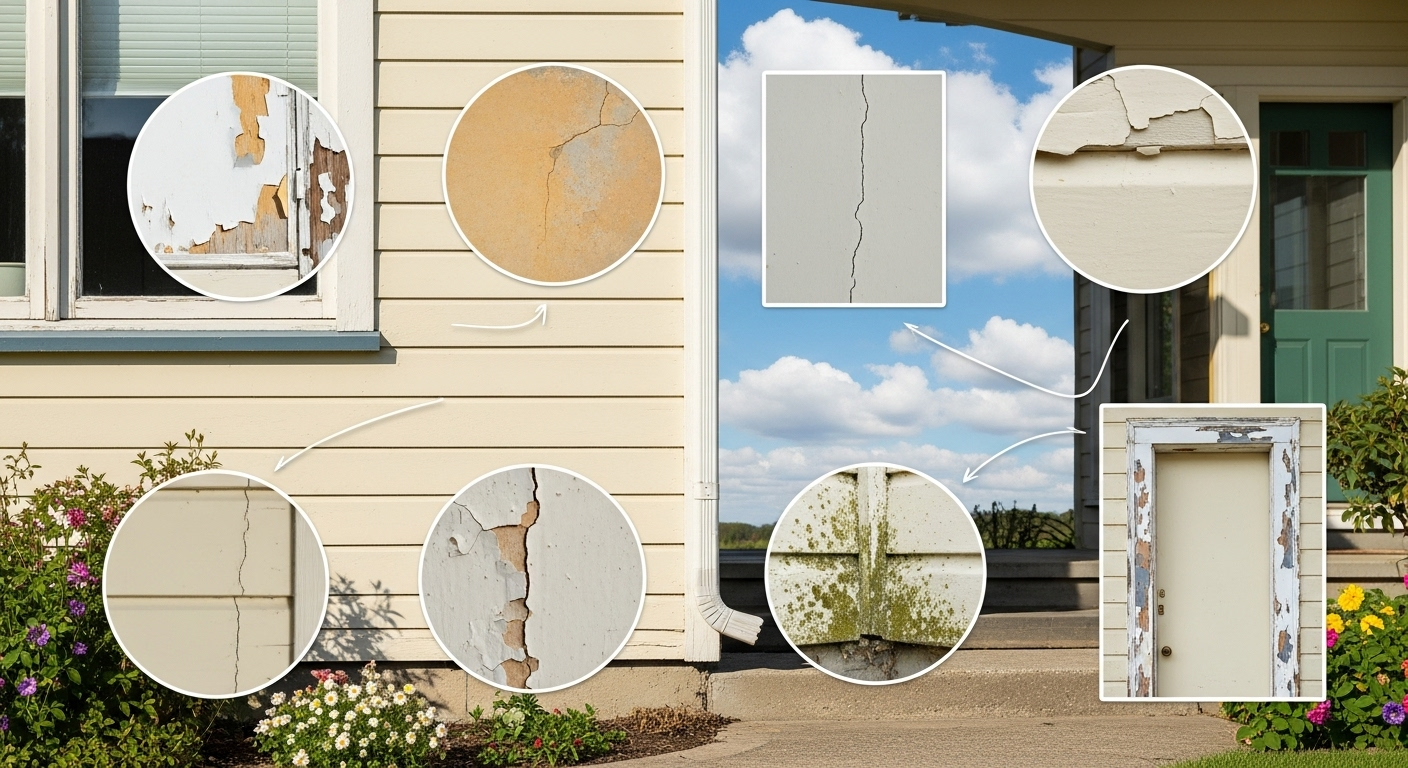
The exterior paint of your home serves not only as an attractive finish but also as the primary barrier against Malaysia’s unyielding sun, intense rainfall, and elevated humidity levels. Although a premium paint application can endure for 5 to 10 years, the tropical climate necessitates constant attention.
Disregarding the indicators may result in expensive structural harm due to moisture. Below are the 6 unmistakable signs indicating that your residence urgently requires a new layer of paint.
1. Peeling, Cracking, or Bubbling Paint
This is the most obvious sign of paint failure, and a major red flag in a humid climate like Malaysia.
Peeling/Cracking: This occurs when the paint loses its adhesion (grip) on the surface underneath. It’s often caused by the constant cycle of the walls absorbing and releasing moisture. The paint film becomes brittle and flakes away.
Bubbling (Blistering): This happens when moisture (or heat) gets trapped behind the paint layer. As the heat from the sun tries to pull that moisture out, the paint lifts up, creating unsightly bubbles.
The Danger: Once the paint peels or cracks, it exposes the plaster or concrete to water, accelerating deterioration and potentially leading to deeper, more costly damage.
2. Extreme Fading or Chalking (Powder Residue)
If your once vibrant wall color now looks pale, dull, or washed out, it is officially failing its most important job: UV protection.
Fading: Constant, intense UV rays from the sun break down the color pigments and the paint’s resin binders. Darker colours fade faster.
Chalking: This is a fine, powdery residue that comes off on your hand when you rub the wall. It’s the paint breaking down due to long-term exposure.
The Danger: Fading and chalking indicate that the paint’s protective barrier is gone. The sun is now directly damaging the wall material, and the surface is no longer sealed against moisture.
3. Mold, Mildew, or Algae Growth
In Malaysia’s high-humidity environment, mould and mildew are common invaders, especially on shaded walls or in areas with poor ventilation.
What to look for: Dark spots, greenish patches, or black stains.
The Cause: Mould spores thrive on moisture and often feed on the components of low-quality paint. While exterior paints include anti-fungal additives, they eventually wear out.
The Danger: Mould and algae are not just an aesthetic issue. They can trap moisture against your wall, slowly degrading the surface material. More critically, wind can carry these spores into your home, affecting indoor air quality.
4. Gaps and Cracks in Window/Door Caulking
Paint isn’t the only sealant on your home’s exterior. Caulk is the flexible material used to seal the joints around windows, doors, vents, and other structural seams.
The Sign: The caulk is brittle, shrunken, or cracked, leaving a visible gap between the wall and the window frame.
The Danger: These gaps are a direct route for rainwater to seep behind the wall and into the frame cavity. This can cause severe dampness, wood rot (if your frames are timber), and can lead to the paint failure described in Point #1.
5. Stains That Won't Wash Off
A good, high-quality exterior paint should be washable. If you try to clean a stain—like dirt splash-back, stubborn soot, or bird droppings—and the stain leaves a permanent mark, it indicates the paint surface has become overly porous.
The Sign: Your usual wall cleaning routine no longer works, and stains seem to ‘sink’ into the surface.
The Danger: Porous paint holds on to dirt, moisture, and pollution, making your house look perpetually dirty. This is a clear sign that the paint’s protective resin has fully degraded and its lifespan is over.
6. Your Home Is Approaching the 5 to 7-Year Mark
Even if your paint looks “okay” from a distance, professional painters often recommend an inspection at the 5 to 7-year mark, especially for properties in direct sunlight or high-rain areas.
Why a Timeframe Matters: Paint degrades even if you can’t see it. The chemical additives that protect against UV and mould have a limited lifespan. By proactively repainting before a total failure, you protect the wall material itself.
The Benefit: Addressing the issue early means less prep work (scraping, sanding, and repair) for the painter, which ultimately saves you money on labour costs.
Conclusion
Safeguarding your residence against the severe tropical climate is the primary function of your exterior paint, and identifying the warning signs is essential to avert significant damage. The most pressing indication that it is time to repaint is the presence of peeling, cracking, or bubbling paint, as this signifies a complete adhesion failure, frequently due to trapped moisture that exposes your underlying concrete or plaster to the elements. Another vital sign is extreme fading or chalking, where your once-vibrant color appears dull, or you can wipe off a fine, powdery residue from the walls, indicating that the paint’s UV protection has entirely deteriorated. Additionally, the occurrence of mould, mildew, or persistent dark stains suggests that the paint is no longer effective against humidity and is serving as a breeding ground for fungal growth, which not only appears unattractive but can also lead to structural dampness. It is also important to inspect for cracked or shrunk caulking around windows and doors, as these openings are direct access points for water, resulting in premature paint failure and possible leaks. Lastly, if the paint has become so porous that ordinary stains cannot be removed, or if your home is nearing the 5 to 7-year mark since its last painting, it is a prudent, preventative action to repaint now before minor issues develop into expensive repairs.